China’s technological self-reliance: a Strategic response to Trump tariff
The latest escalation in U.S.- China trade tensions has drawn strong reactions from governments, businesses, and the public, as President Donald J. Trump imposed a 10% tariff on all Chinese imports and 25% tariffs on imports from Canada and Mexico. While Washington frames the move as an effort to protect American industries and curb China's unfair trade practices, Beijing has swiftly responded with retaliatory tariffs, a formal complaint at the World Trade Organization (WTO), and additional regulatory measures targeting U.S. firms.
Despite these tensions, some voices within China view Trump’s tariffs differently than expected. According to journalist Federico Rampini, while the tariffs are publicly condemned, certain factions in China see them as a strategic opportunity—a push toward reducing reliance on U.S. trade, accelerating domestic industrial independence, and reinforcing China’s long-term economic self-sufficiency.
The consequences of this trade conflict extend far beyond China and the U.S., affecting global industries, including European economies like Italy. While China maneuvers to absorb the impact and strengthen domestic production, European exporters—particularly in sectors like machinery, luxury goods, and industrial manufacturing—are caught in the crossfire.
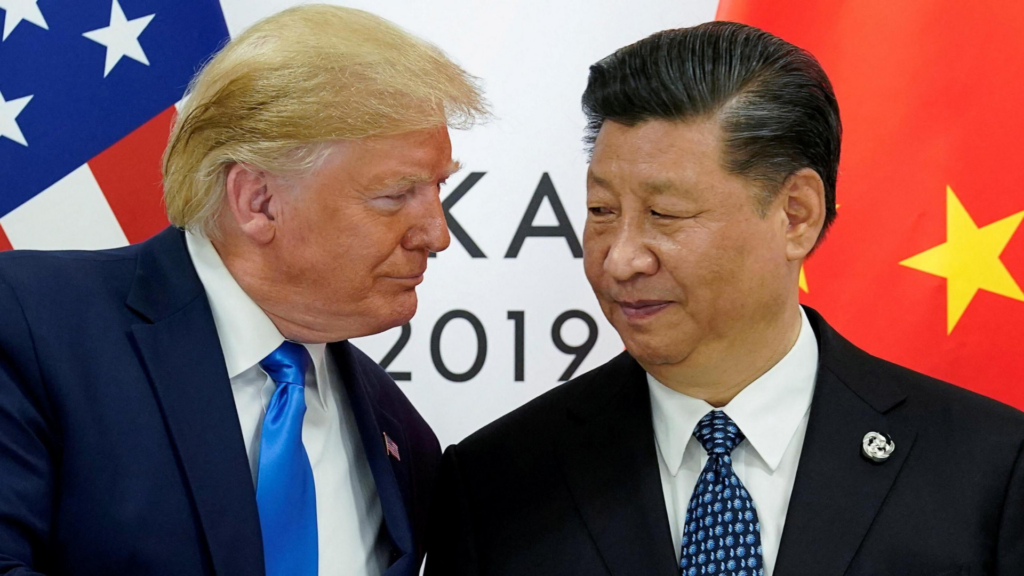
The Chinese Ministry of Commerce swiftly condemned the U.S. tariffs, labeling them “malicious” and a violation of WTO trade rules. In response, Beijing announced counter-tariffs set to take effect on February 10, 2025, targeting key American industries:
- 15% tariffs on U.S. coal and liquefied natural gas (LNG)
- 10% tariffs on crude oil, agricultural machinery, and large vehicles
Additionally, China has filed a formal complaint at the WTO, arguing that Trump’s tariffs violate trade principles and existing international agreements. However, Rampini highlights that China has turned these challenges into a broader strategy, using trade conflicts as a catalyst for its long-term goal of economic self-sufficiency.
“Beijing understands that while tariffs cause short-term pain, they accelerate the shift away from U.S. dependency,” Rampini notes.
Analysts suggest that by selectively targeting energy imports rather than escalating into a full-scale trade war, China is leaving room for future negotiations while simultaneously investing in domestic supply chains and expanding trade partnerships. This measured approach reflects Beijing’s growing resilience in handling trade disputes, a shift that some experts attribute to China’s economic evolution over recent years.
One expert noted that "China is much better prepared [than during Trump's first term]." While acknowledging that China’s economy has slowed cyclically, they emphasized that "their technology capabilities are a lot greater than they were before, and they have diversified their trade and investment with others." This suggests that while China is not ignoring the economic pressure from U.S. tariffs, it is approaching the situation with greater strategic flexibility and economic leverage than in previous trade conflicts.
The White House has justified the tariffs as a critical measure to protect American industries and counter China’s growing dominance in key markets. Officials have also framed the tariffs as a national security measure, with President Trump directly linking them to efforts to curb fentanyl exports from China, a longstanding U.S. concern. Trump has further stated that the tariffs are a necessary response to what he calls an "extraordinary threat" posed by illegal migration and drug trafficking, particularly the fentanyl crisis. While trade discussions between Trump and Xi Jinping remain a possibility, no official meetings have been scheduled. The Biden administration had previously sought to de-escalate trade tensions with China, but Trump’s new tariffs mark a decisive return to a more aggressive economic stance toward Beijing. While the White House defends the tariffs as a measure to protect American industries and curb China’s dominance, Beijing has taken a strategic approach—leveraging tariffs and WTO complaints while positioning itself for long-term economic independence.
At the same time, U.S. businesses and consumers are warning that the tariffs could increase costs and disrupt supply chains, creating inflationary pressure in an already volatile global economy. The tariffs have triggered anxiety in business sectors across China, the U.S., and Europe. Rampini argues that China has anticipated these economic battles and adapted its strategy accordingly, yet the broader ripple effects remain significant.
Chinese oil and gas traders are seeking tariff waivers from Beijing to continue importing U.S. crude oil and liquefied natural gas (LNG) without facing significant financial strain. Meanwhile, U.S. farmers and manufacturers warn that China’s counter-tariffs could disrupt American exports of soybeans, pork, and industrial goods, particularly affecting Midwestern states that heavily rely on agricultural trade with China. Additionally, technology firms like Apple and Tesla may face increased regulatory scrutiny from Beijing, introducing new risks to their operations in China.
Public reaction in China has been split, with nationalist support for Beijing’s retaliation on Weibo but concerns among business owners and economists. The hashtag #中国不再是八年前的中国 (China is no longer the China of eight years ago) has been widely shared, emphasizing the idea that China is stronger and more prepared for trade disputes than in previous years. However, not all are convinced. Some Chinese exporters worry about rising costs and shifting supply chains, with a Shanghai-based electronics manufacturer stating that tariffs may force his company to pivot away from the U.S. market. This sentiment aligns with Rampini’s argument that China is using the trade war to deepen its economic transformation, encouraging firms to focus on alternative markets and self-reliance.
While much of the focus has been on the U.S. and China, European industries, including Italy’s manufacturing and export sector, are also feeling the ripple effects of Trump’s tariffs. If China shifts its focus away from U.S. markets, European firms could either gain new business opportunities or face stronger Chinese competition in global markets. As a result, Italy’s industrial sector must adapt to remain competitive despite U.S.-China disruptions.
Trump’s tariffs have reignited trade tensions, prompting China’s strategic retaliation and WTO complaints, while raising concerns among businesses worldwide. Rampini’s analysis suggests that China views this not as a crisis but as a long-term challenge, using it as an opportunity to reduce reliance on the U.S., strengthen domestic industries, and pivot toward self-sufficiency. However, the consequences extend beyond the two superpowers, affecting European industries, global inflation, and supply chains.
Will Trump’s tariffs force China into economic concessions, or will they unintentionally solidify Beijing’s long-term self-reliance? And as China adapts, will Europe and the U.S. find themselves adjusting to a new global trade order, one where China’s influence grows stronger despite economic pressure?
Sources